
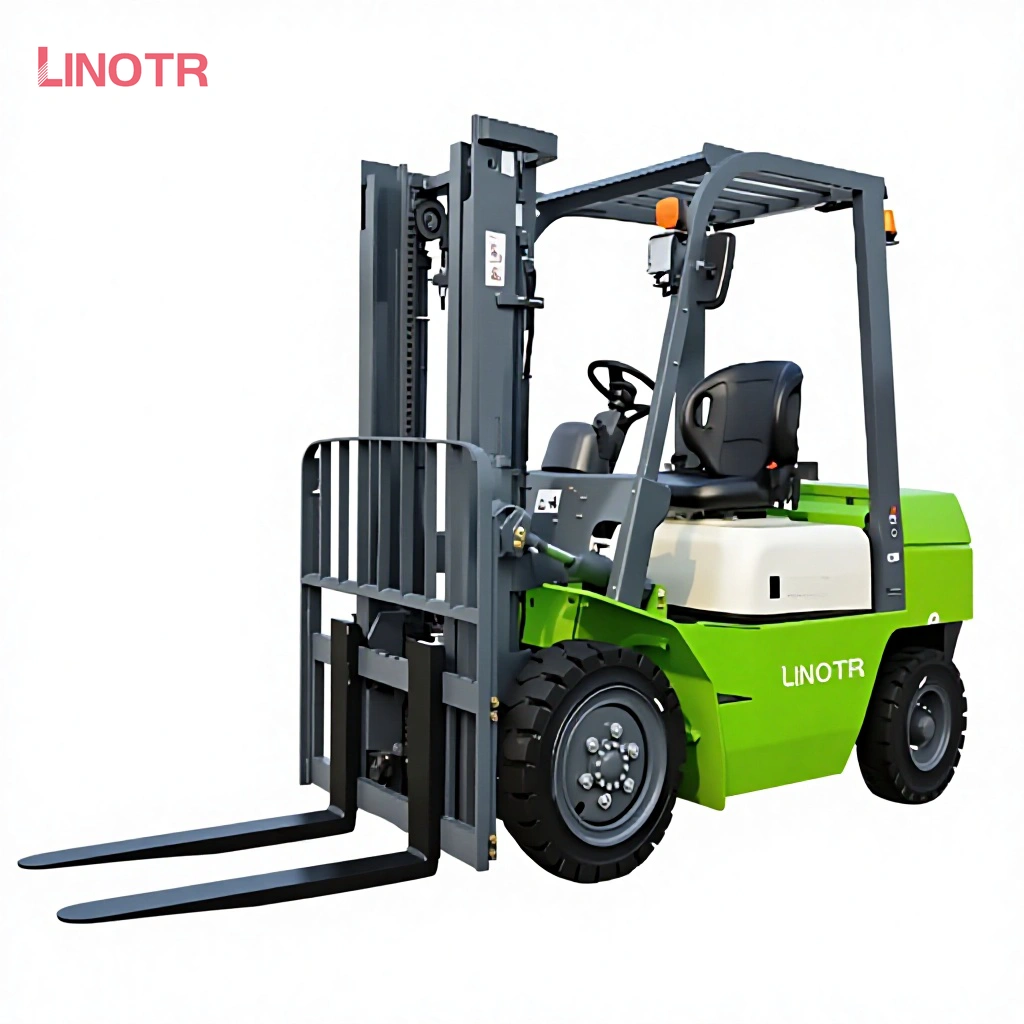
CPD-30 3T Electric Forklift
3-ton capacity CPD-30 Electric Forklift offers reliable indoor material handling. A top choice for mini excavator suppliers seeking robust compact excavator and electric mini excavator integration.
View productIf you are evaluating electric stacker manufacturers, the fastest route to a defensible decision is to benchmark one real specification against the load you actually handle — and then hold the shortlist of warehouse handling equipment manufacturers to the same standard. This guide uses the CDD-20 2T stand-on electric stacker as that benchmark, converts its published figures into supplier questions, and closes with the commercial terms that belong in your request for quotation.

Before comparing prices, decide what kind of supplier you are buying from. The entity type shapes who controls the mast build, who signs the warranty, and who still answers the phone in year three. The three models below cover almost every quotation you will receive.
Owns the fabrication, welding, painting and assembly of its own stackers. You gain control over mast build, wheel specification and long-term spare parts, but you also carry the full burden of auditing the plant. Confirm the licence name, the factory address and the line that will actually build your units.
Offers a broad catalogue and fast replies, but may not build the equipment. Ask which factory produces the exact model you are quoted, who signs the warranty in your name, and who ships consumables and spare wheels after the order closes.
Builds to your brand, decals, colour and configuration. Expect tooling and minimum-order commitments, and insist on a signed specification sheet before any deposit so that mast height, battery configuration and wheel type cannot drift between the sample and the shipment.
Every supplier conversation becomes shorter when you carry one complete specification. The CDD-20 is a 2-tonne, stand-on electric stacker published in six mast heights, from 1.6 m to 4.5 m. The values below are the figures listed for that model — use them as the yardstick against any quoted alternative.

| Item | Unit | 1.6 m | 2 m | 2.5 m | 3 m | 3.5 m | 4.5 m |
|---|---|---|---|---|---|---|---|
| Drive mode | — | Electric | Electric | Electric | Electric | Electric | Electric |
| Operation mode | — | Stand-on | Stand-on | Stand-on | Stand-on | Stand-on | Stand-on |
| Rated load | kg | 2000 | 2000 | 2000 | 2000 | 2000 | 2000 |
| Load centre distance | mm | 570 | 570 | 570 | 570 | 570 | 570 |
| Dead weight | kg | 620–700 | 620–700 | 620–700 | 620–700 | 620–700 | 920 |
| Mast type | — | Single-stage | Two-stage | Two-stage | Two-stage | Two-stage | Three-stage |
| Free lift height | mm | 1600 | 200 | 200 | 200 | 200 | — |
| Overall static height | mm | 2000 | 1500 | 1750 | 2000 | 2250 | 2030 |
| Max. fork lift height | mm | 1600 | 2000 | 2500 | 3000 | 3500 | 4500 |
| Min. fork lowered height | mm | 85 | 85 | 85 | 85 | 85 | 85 |
| Anti-tip support leg spread width | mm | — | — | — | — | — | 1900 |
| Max. mast height after lifting | mm | 2000 | 2420 | 2920 | 3420 | 3920 | 4920 |
| Overall length (pedal retracted) | mm | 1850 | 1850 | 1850 | 1850 | 1850 | 1850 |
| Overall width | mm | 825 | 825 | 825 | 825 | 825 | 990 |
| Fork length | mm | 1150 | 1150 | 1150 | 1150 | 1150 | 1150 |
| Fork outer width | mm | 685 | 685 | 685 | 685 | 685 | 685 |
| Min. aisle width required | mm | 2300 | 2300 | 2300 | 2300 | 2300 | 2300 |
| Turning radius | mm | 1400 | 1400 | 1400 | 1400 | 1400 | 1400 |
| Wheel material | — | Polyurethane | |||||
| Front (support) wheel size | mm | 80*70 | |||||
| Auxiliary (rear) wheel size | mm | 100*50 | |||||
| Min. / max. chassis ground clearance | mm | 30 / 30 | |||||
| Travel speed (loaded / unloaded) | km/h | 4.5 / 6 | |||||
| Lifting speed (loaded / unloaded) | cm | 14 / 16 | |||||
| Travel brake | — | Electromagnetic | |||||
| Drive motor power | kw | 1.2 | |||||
| Lifting motor power | kw | 2.2 | |||||
| System voltage | v | 48 | |||||
| Battery capacity | ah | 32*4 | |||||
| Battery type | — | Maintenance-free | |||||
| Operator ear noise level | dB(A) | 65 | |||||

Each row takes a published CDD-20 figure, matches it to the buyer requirement behind it, and ends with the question you should send to every supplier on your shortlist. Copy the question column straight into your enquiry email.
| Buyer requirement | CDD-20 published fact | Question for the manufacturer |
|---|---|---|
| Unit load and total pallet weight | Rated load 2000 kg on all six variants | Send the load chart for the exact mast variant I am buying, at full lift height, and tell me the derating rule if my load centre exceeds 570 mm. |
| Pallet depth and stability | Load centre distance 570 mm | Confirm the rated capacity at my actual pallet depth and load centre, and state whether the figure holds with the load at maximum height. |
| Racking beam height | Max fork lift height 1600–4500 mm across six mast variants | Which mast reaches my beam height, and how much free lift do I get — 200 mm on the two-stage options or full lift on the single-stage 1.6 m? |
| Narrow travel path | Min. aisle width required 2300 mm; turning radius 1400 mm; overall width 825 mm (990 mm at 4.5 m) | Confirm the achievable aisle with my widest load and tell me how the 990 mm width of the 4.5 m variant changes that calculation. |
| Floor finish and wheel wear | Polyurethane wheels; front support wheel 80*70 mm; auxiliary (rear) wheel 100*50 mm | Which wheel compound do you supply for my floor finish, how often should the wheels be replaced, and what floor condition do you recommend? |
| Dock plates and floor joints | Chassis ground clearance 30 mm (min. and max.) | Confirm the chassis will clear my dock plates and floor joints at 30 mm, and tell me the maximum step the truck tolerates. |
| Shift runtime and charging routine | 48 V system, maintenance-free battery, listed capacity 32*4 ah | What runtime does this give in my shift pattern, how long is a full charge, and can the truck work a second shift on opportunity charging? |
| Stop-start control and safety | Electromagnetic travel brake; travel speed 4.5 / 6 km/h | How does the electromagnetic brake behave on ramps and in repeated stop-start pallet handling, and what maintenance does it need? |
| Noise in a shared warehouse | Operator ear noise level 65 dB(A) | How is the noise figure measured, and is it representative of a loaded truck working a multi-shift indoor operation? |
| Floor loading and freight planning | Dead weight 620–700 kg; 920 kg at the 4.5 m variant | Confirm the shipping weight, crating method and lifting points, and state the slab loading I should allow for on an upper floor. |

A specification wins the technical argument; commercial terms decide whether the order is profitable. Fill in every field below before you ask for a final price, and never accept a quotation that leaves a row blank.
| RFQ field | What to state | Why it matters |
|---|---|---|
| Model & configuration | Model number, mast height and mast type, load capacity, wheel type, battery configuration | Prevents a quotation for a cheaper variant being confirmed against a different build. |
| Quantity & MOQ | Units required now and the expected annual volume | Establishes whether your volume qualifies for OEM/ODM terms or a bulk price tier. |
| Unit price & currency | Price per unit, currency, and whether it includes options and decals | Makes quotations from different suppliers genuinely comparable. |
| Incoterms & destination | EXW, FOB or CIF, plus port of loading and final delivery point | Moves freight, insurance and risk to the party that priced for it. |
| Lead time | Days from deposit to readiness, and from readiness to shipment | Separates production time from logistics time so your launch date holds. |
| Packaging | Crating type, protection for the mast and forks, container loading plan | Reduces transit damage and confirms the loading configuration before the truck is built. |
| Payment terms | Deposit percentage, balance trigger, accepted payment method | Aligns payment with a documented inspection milestone. |
| Warranty & spares | Warranty period, exclusions, spare-parts list with lead times | Turns after-sales promises into a document you can enforce. |
| Documentation | Manual, spare-parts book, certificates, packing list, invoice details | Speeds customs clearance and in-house maintenance later on. |
| Sample or trial order | Whether a single-unit trial order is accepted before a fleet commitment | Lets you verify build quality on your own floor before scaling up. |
| Total cost of ownership | Unit price plus freight, duty, charging, wheels, service and downtime | Stops the lowest quotation from becoming the most expensive machine. |
Send your unit load, pallet size, required mast height, narrowest aisle and shift pattern. You will receive a quotation that names the exact mast variant, wheel specification, battery configuration and warranty terms — so the specification you approve is the specification you receive. OEM branding, bulk quantities and custom configurations can be discussed in the same enquiry.

Keep adjacent product options together for a faster catalog comparison.
3-ton capacity CPD-30 Electric Forklift offers reliable indoor material handling. A top choice for mini excavator suppliers seeking robust compact excavator and electric mini excavator integration.
View product

2000 kg rated load on all six mast variants, with a 570 mm load centre. the rating is set at that load centre, so ask for the derating rule if your load sits further out.
the range runs from a 1.6 m single-stage mast through 2, 2.5, 3 and 3.5 m two-stage masts to a 4.5 m three-stage mast. the two-stage options give 200 mm of free lift, which matters when the truck has to enter a trailer or pass under a low beam.
the five-step model on this page: define the handling task, choose the sourcing model, verify the legal entity and the physical plant, benchmark one published specification against your task, then issue the rfq. a supplier check also covers quality ownership, after-sales capacity, a spare parts list and the export record.
65 db(a) at the operator's position supports indoor multi-shift work where alarms and conversation still have to be heard, the 48 v maintenance-free battery removes watering from fleet upkeep, and 30 mm of chassis clearance sets the floor quality the truck expects. run it on level, sound floors free of raised joints and debris.
the load chart for the exact mast variant you are buying, at full lift height, plus the derating rule if the load centre exceeds 570 mm. state the pallet depth, the racking beam height and the narrowest aisle the truck must travel so the configuration is settled before the order.
the mast variant, fork dimensions, battery and any attachment change the quotation, so the commercial terms are priced against the configuration you confirm. the page keeps a commercial glossary so both sides use the same wording.
